Policy Q&A: The President of the Buffett Early Childhood Fund on 20 Years of Progress in Early Childhood
Jessie Rasmussen reflects on how science has helped build the case for investing in the earliest years—and how the field can drive further progress for young children and their caregivers.
Since its founding in 2006, the Harvard Center on the Developing Child has worked to leverage the power of science in pursuit of better, more equitable outcomes for young children facing adversity.
As the Center marks its 20th year, we are reflecting not only on our own history, but also on how the field has changed and advanced—and what work remains to ensure every child has what they need to thrive. Our Policy Q&A series features a diverse array of perspectives on the many ways that science, community expertise, and lived experience have shaped the field over the last two decades, and how they can inform policy and program design to support healthy development in the decades to come.
Improving the lives of young children requires action across many levels—from direct care in the classroom to policy changes in the statehouse. This approach is at the core of the Buffett Early Childhood Fund, which invests across early childhood practice, policy, and science to create structural change that enables every child to thrive.
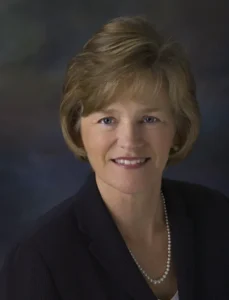
It’s also reflective of the career of Jessie Rasmussen, the Fund’s president. Rasmussen spent 25 years as a teacher in Head Start and Early Intervention programs before becoming a state senator in Nebraska, driven by the idea that she could advocate for children beyond the classroom. She later led Nebraska’s Department of Health and Human Services and became involved in policy work before ultimately joining the Buffett Early Childhood Fund. Today, Rasmussen draws on her experiences as a practitioner, legislator, and government administrator to guide the Fund’s investments in early childhood—including a longstanding partnership with the Center on the Developing Child to advance scientific understanding in the field.
In this Q&A, Rasmussen shares how science has helped build the case for investing in the earliest years, why early childhood policies resonate across political divides, and how addressing broader issues like housing can drive further progress for young children and their caregivers.
You’ve been with the Buffett Early Childhood Fund since 2007. Could you provide an overview of the Fund’s history, mission, and approach to improving outcomes for young children?
When our benefactor, Susie Buffett, first started getting into philanthropic work, she met with the superintendent of the Omaha Public Schools. The superintendent said to her, “Kids are arriving at kindergarten already one to two years behind. And as hard as we try, we have difficulty enabling them to catch up. Don’t give us money—do something about the kids in the first five years.” It was an aha moment that the achievement gap that everybody was talking about in third grade was really about an opportunity gap in the first five years. So our original purpose was to fill that opportunity gap by providing high-quality birth-to-five services for children from marginalized communities.
Very early on, both my predecessor and I understood that we needed to invest in practice, policy, and science—and it’s the interaction between those three areas of work that can make an impact. Practice should dictate what we research, so that we can improve our practice, while research should influence policy and practice, and so on. That’s what we’ve really built capacity around and have maintained a focus on.
In terms of practice, we have built up and supported the national network of Educare Schools [which provide high-quality early education to children from birth to age five]. In terms of policy, we’ve partnered with other funders to establish the First Five Years Fund at the federal level, and the Alliance for Early Success, which is a state-based granting operation. And through investments in places like the Center on the Developing Child at Harvard University and James Heckman’s research on the Perry Preschool Project, we’ve focused on building the knowledge to inform practice and policy.
Now, we are thinking more and more about going upstream. What are the systems issues? What are the policy issues that are going to make a difference in the lives of children and families? And, how do we use the experience we gain through practice, and the knowledge we gain through science, to influence those policies?
The Buffett Early Childhood Fund has invested in the Center on the Developing Child since its founding—and the National Scientific Council on the Developing Child for even longer. Could you talk about the history of this partnership?
One of the very first investments we made, to address the need for science and knowledge-building, was in the Center on the Developing Child. We immediately saw the Center as a credible source of information about how children grow and develop. But even more importantly: about how we make that information accessible to the people who are influencing and making decisions about policies and practice. The Center was a perfect place because the team took what we were learning about brain science and figured out the best way to communicate that to the general public and to people on the legislative and administrative sides of government who are making the decisions that impact the lives of children and families.
The fact that the Center has continued to grow in its knowledge-building means it was not a one-and-done investment, but an investment across time to keep up with what the science is saying about what’s important in the lives of children.
As you note, communicating science has been a priority for the Center from the very beginning. One example is the development of simple metaphors to increase understanding of key science concepts—including terms like brain architecture, toxic stress, and serve and return. What’s your perspective on how those communications have helped shape the field?
“While early on there may have been more of a focus on adult-child interactions, we’re understanding more about the child in the context of the whole community.”
One of the strengths of the Center on the Developing Child is that the team has really focused on effective communication, paying attention to how people respond to certain words and messages and finding the ones that work. Early on, I attended a few of the National Scientific Council on the Developing Child meetings, and I saw how much time, effort, and thought was put into coming up with those simple phrases that are so powerful. The metaphors have been terrific in terms of explaining the science so that it’s understandable and effective.
Now, what we need to do is expand these metaphors. While early on there may have been more of a focus on adult-child interactions, we’re understanding more about the child in the context of the whole community. For example, it’s not only about serve and return between adults and children. There are larger pressures in children’s lives that parents do not have control over, whether it’s unstable housing or lack of health care, that can contribute to toxic stress. So now we have to communicate about those issues, too.
Could you share an example of how this increased public understanding of early childhood development and these key science concepts has helped produce meaningful policy or programmatic changes—particularly in ways that cross political divides?
I’ll give you an example of a very specific thing that happened here in Nebraska. Dr. Jack Shonkoff came and presented to state government staff, legislators, and administrators on brain development, serve and return, and toxic stress. And it just so happened that the director of Medicaid came to that meeting. When he left, he ended up changing a policy about Medicaid funding Parent-Child Interaction Therapy [a treatment that helps caregivers manage behavioral challenges]. Originally, the director was skeptical. But once he saw and understood the brain science that suggested that kind of therapy would be important and make a difference, there was a direct change in policy.
Generally speaking, the brain science has influenced both the general public and policymakers, especially when they actually “see” the way the brain responds to adults interacting with babies.
Now, childcare has really risen to the top of issues with bipartisan support. I see more recognition that we ought to pay more attention to our investments in early childhood programs like childcare—and what science is telling us about what’s important for children to experience. It isn’t about watching kids while parents work; it’s about creating safe, healthy, and responsive environments that promote their healthy growth and development.
As the Center celebrates its 20th anniversary, we’re reflecting not just on our own history, but also on how the broader early childhood field has evolved over the last two decades. From your vantage point, what have been the greatest areas of progress when it comes to how we understand and talk about early childhood?
I think the biggest change is that the vast majority of people now realize that what happens in the earliest months and years matters, and it matters big time. If you look at the polling, it’s a very bipartisan position that the early years are important and we ought to invest in them. That has been a sea change.
“The vast majority of people now realize that what happens in the earliest months and years matters, and it matters big time.”
More recently, there’s been a growing awareness of two things. One is that when we pay attention to thriving families and thriving children, we get a thriving community, a thriving economy. The other understanding is that we are not done—and there’s still a lot more to learn. Our challenge now is really to get people to a sense of urgency about investing in young children. We have to move from “it’s important,” to “it’s a priority, and we need to make it happen for our children now.” I use the line: You cannot put a two-year-old on pause.
The Center emphasizes that policy and program solutions must extend well beyond traditional “children’s issues” to include a wide range of policy domains that shape children’s environments. Given the broad array of opportunities this expanded view offers us to improve conditions for young children and caregivers, what do you see as the top policy and program priorities?
Two issues stand out: childcare and housing. When I look at polling or I’m listening to people from communities across the country, those issues rise to the top in terms of public awareness and the number of families experiencing the stress of not having stable housing or being able to access quality childcare.
Childcare is also a top bipartisan issue because of the general theme of affordability. We’re seeing childcare issues impact the economics of our cities and states. Parents are dropping out of the workforce because they can’t afford childcare, and programs are closing because they can’t charge the parents more, and yet they can’t make it work in terms of retaining staff with worthy pay.
What’s important is that we realize these policy issues are interconnected. And while we certainly hear it in the community that works directly with young children and families, I think we still have a ways to go with policymakers. I’m not sure we’re there yet in terms of everyone understanding that these things like stable housing and quality childcare, or the environment, are important for the healthy development of young children and should be a priority.
The Buffett Early Childhood Fund has a deep commitment to Nebraska and the surrounding region—including rural areas that often receive less attention in national discussions. Given our understanding that children’s broader environments shape their development and health, what do you wish others knew about early childhood issues in rural contexts?
One of the greatest challenges in rural communities is that the resources aren’t always there. There are often not enough people in a small community to justify a health clinic. The same is true about childcare: you may not have enough children to make the business work. It’s just the nature of small communities, especially in a place like Nebraska where there’s a lot of land and distance between places.
That should push us to be more innovative about how we deliver these services. We’ve seen some examples of solutions in Nebraska, such as providing remote coaching for early childhood teachers, or building more capacity around birth doulas in rural communities. County extension [a public-service program that connects university research to the community] is also really valuable in Nebraska, as it is in a lot of states. It was originally developed to provide the agricultural community with the latest information, and it’s a trusted resource in most rural communities. We’ve used county extension as a tool to convey good information about early childhood to families and caregivers.
I’ve also learned that it’s really important to let communities come up with the solution that’s going to work for them. About eight years ago, we started getting calls from small rural communities in Nebraska. Depopulation is their greatest threat to survival, and they need to figure out how to get young professionals to stay in their community to be their teachers, doctors, grocery store owners, hog farm managers. They came to the conclusion that the two reasons they couldn’t get young families back were affordable housing and quality childcare. The leaders in the community didn’t know anything about childcare, and so they came to us for help. We’re now up to over 100 communities in our Communities for Kids program [an initiative that helps to strengthen and sustain quality early childhood care and education infrastructure in communities across Nebraska]. While we require a focus on quality and affordability for every family, each community identifies the solution that best fits their community. They own it. It’s their solution and they want to make it last. So I have great respect for shaping policy in a way that allows for unique solutions to be developed by communities—by the people who live there—with support and guidance. When we try to impose urban solutions in rural settings, it often doesn’t work very well.
As we look ahead to the next 20 years, what do you see as the most critical changes that need to happen to ensure that all young children have what they need to
thrive? What gives you hope?
“What I want to see in the future is a fundamental acceptance that policies that impact young children are just as essential to our country as the roads and bridges—that it is essential that we pay attention to what happens to our youngest children.”
What gives me hope for the field is that there are a lot more people who understand that what happens in the earliest months and years is absolutely critical. And they’re taking it one step further: More and more people realize this has implications for policy, for what we do with our housing, childcare, health care, and other issues that impact children in the early years.
What I want to see in the future is a fundamental acceptance that policies that impact young children are just as essential to our country as the roads and bridges—that it is essential that we pay attention to what happens to our youngest children. My other major hope for the future: that we recognize that those who care for children in partnership with parents are professionals and that they deserve worthy pay and recognition for the critical importance of their work.
The Center on the Developing Child is committed to elevating a variety of perspectives around supporting healthy development in the earliest years. The views and opinions expressed by Policy Q&A subjects are those of the individual and do not necessarily represent those of the Center.