A Message from Faculty Director Stephanie M. Jones, PhD
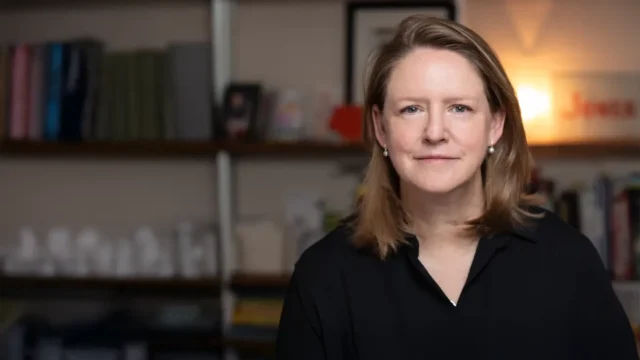
September 2026
Twenty years ago, when the Center on the Developing Child began its work, the importance of the early childhood period, and the central concepts that define it, were not broadly understood in the public domain. Developmental science was advancing rapidly in many areas and disciplines. But its translation into digestible, actionable ideas that could inform policymaking and practice in early childhood, and become embedded in public discourse, was not.
The importance of effective science communication was not a new concept in 2006. In fact, luminaries in our field (e.g., Edward Zigler, widely known as the father of Head Start; Julius Richmond, a co-architect of Head Start and a founding father of the Center; and Urie Bronfenbrenner, author of the now ubiquitous ecological systems theory) had long articulated that the most impactful science is rigorously grounded, relevant to the lived experience of families with young children, and presented in compelling terms for those who might take it up in their applied work in policy and practice.
“That model of translational, multidisciplinary, and applied developmental science is the Center’s most enduring contribution from the last 20 years, and it will remain essential as we enter into our next era.”
The Center, under the pioneering leadership of Founding Director Jack Shonkoff, made this vision a reality and in so doing has transformed the landscape of early childhood. Concepts like brain architecture, serve and return, and toxic stress have become working vocabulary for policymakers, advocates, pediatricians, social workers, school leaders, parents and caregivers, and many others whose roles connect in one way or another with early childhood. The Center forged a model of science communication that distilled the most robust and consistent findings from across developmental neuroscience, biology, psychology, economics, and many other disciplines into frameworks that practitioners and policymakers could understand and put into action. That model of translational, multidisciplinary, and applied developmental science is the Center’s most enduring contribution from the last 20 years, and it will remain essential as we enter into our next era.
Below are some examples of how the Center’s translational early childhood concepts have been taken up in the world.
- Twenty years ago, the science describing how the brain develops—and specifically how the neuronal and synaptic connections in it are strengthened or weakened with experience—was held in laboratories and scientific journals and was largely invisible in public life. Today, the translated concept of brain architecture is cited in state legislative testimony, pediatric care protocols, philanthropic strategic and grantmaking plans, and in school board documents from Massachusetts to California.
- The idea that strong, frequent, or prolonged activation of the body’s stress response system influences physical and mental health and well-being was once a clinical research concept, relatively unknown outside specialist circles. Now it shapes how pediatricians screen patients, how social workers and other front-line service providers support families, and how legislators think about anti-poverty investment.
- The importance of sensitive, contingent, responsive interactions between infants and caregivers was once known primarily to developmental researchers. Today, serve and return is the organizing principle of home-visiting curricula and parent-coaching programs reaching families in dozens of countries worldwide.
- And resilience, long believed to operate primarily as an individual trait (something children either had or didn’t), is now widely understood to be something that communities, policies, and supportive relationships can actively build—opening entirely new directions for intervention, supportive practice, and policy design.
Evolving Toward an Expanded Science Story
As the Center enters its third decade, our core commitment to science synthesis, translation, and communication remains the same. But the frame for that work has expanded to include a wide array of influences from the developmental environment that play a central role in shaping early development and lifelong health. In other words, what surrounds us shapes us—from our earliest relationships, to our neighborhoods, to the quality of the air we breathe. The developing child is at the center of a dynamic, interconnected set of conditions, structures, and systems and is an active participant in shaping them over time. Looking ahead to this next era of work, we understand this concept in a more expansive and active way. The realities of young children and families exist within a complex, interactive landscape, where a shift in one relationship, one policy, or one neighborhood condition is not contained—it cascades through the wider landscape of social, environmental, and systemic influences that surround and shape a child. Much like a small pond, a child’s environment is an ecosystem in which a disturbance anywhere in the system ripples out to touch every other part.
“What this means, for those of us working to improve the lives of young children and their caregivers, is that every supportive action we take can have a cascading effect.”
What this means, for those of us working to improve the lives of young children and their caregivers, is that every supportive action we take can have a cascading effect. The practical necessity of this idea is clear. When we increase economic security, it brings greater stability into the lives of families, making space for the kinds of responsive caregiver interactions, consistent routines, and cognitive resources that are so essential to children’s daily experience. When families have safe, stable housing, children can grow lasting, supportive connections with caregivers, teachers, and neighbors. These kinds of sustained, supportive connections and relationships are a powerful engine of healthy development. The social and emotional capacities we ask children to build in classrooms are not separate from whether their teachers are supported, their families economically stable, or their neighborhoods safe and connected. They are deeply, bidirectionally entangled with those conditions.
The next decade of the Center’s work takes this idea seriously and is intended to address the broad array of factors that shape a child’s developmental environment, translating the complexity of that landscape into frameworks, concepts, and strategies that people working across policy, practice, and community can use. As the Center’s new Faculty Director, I am eager to work with staff, faculty, and partners on the ground to shape how this work will move forward in a way that builds on the Center’s strengths in service of today’s most pressing questions and challenges.
A New Era of Challenges—and Opportunity
As we work collaboratively to shape the contours of the Center’s refreshed strategy for the next decade, there are some complex but critical tensions to keep in mind and grapple with.
Universal, but Not Uniform
There are certain developmental processes that we understand to be universal across children and contexts. These include the need for responsive relationships and serve and return interactions; the toll of toxic stress when young children face sustained adversity; and the way that a child’s brain architecture and other biological systems are built over time through an ongoing process that begins before birth. But how those processes actually unfold across varying ecological systems and experiences, and what effectively supports them, likely varies enormously across cultures, communities, and individual lives. The challenge for a new era of translational work exploring the many influences that shape development is attending to what children have in common without imposing a one-size-fits-all solution. We need to recognize and acknowledge important variations without losing the throughlines that make the science generalizable and actionable.
Rigorous and Relevant
We must also return to those early calls from Zigler, Richmond, and Bronfenbrenner for a science that is rigorous, relevant, and resonant, which has served as a foundation for the Center’s work and focus. The idea of relevance and resonance means a science grounded in the real and urgent questions and challenges faced by early childhood policymakers and practitioners. And that means letting the real questions, challenges, and conditions of practice and policy genuinely inform what research addresses and how it is interpreted. A second challenge for the next era of translational work that considers the full, interconnected scope of children’s environments is ensuring that science does not exist in a vacuum—we must consider the lived experience and expertise of children and their caregivers as we design, interpret, and translate new research. We are committed to building this dynamic interplay into the Center’s work.
“I am honored to carry this work forward with the extraordinary community of staff and researchers, practitioners, policymakers, and partners who make up the Center’s own ecological system.”
Twenty years in, our developmental science evidence base is richer, more interdisciplinary, and more complexly ecological. The translational and communication work must also reflect some of these complexities so that future practical work meets the real lives of children and families today. The full work lies ahead of us: understanding the dynamic ecology that shapes human development, bringing into it the questions and challenges of today, and translating that understanding into policy and practice that is universal in its reach, but non-uniform in its design. I am honored to carry this work forward with the extraordinary community of staff and researchers, practitioners, policymakers, and partners who make up the Center’s own ecological system.