A Message from Founding Director Jack P. Shonkoff
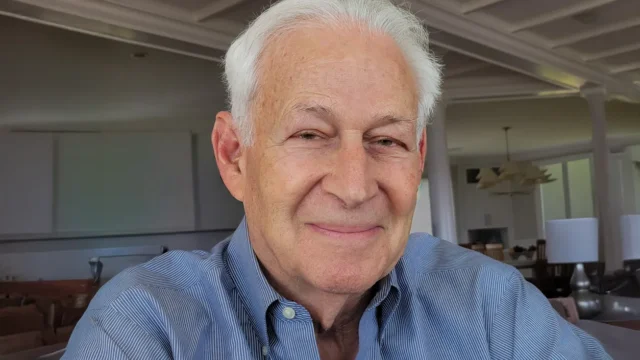
Reflections on the Center’s 20th Anniversary
Two Decades of Achievement and Much Still to Be Done
In September 2006, at an event honoring Julius Richmond on his 90th birthday, Harvard University launched the Center on the Developing Child as a new, university-wide Inter-Faculty Initiative. The brain trust that facilitated the birth of the Center included Richmond (Founding Director of Head Start, Surgeon General in the Carter administration, and Distinguished Professor Emeritus), Steve Hyman (University Provost), Kathy McCartney (Dean of the Graduate School of Education), and Barry Bloom (Dean of the School of Public Health). Their goal was to mobilize Harvard’s academic resources and public platform to advance the well-being of children.
The core team that navigated the Center’s early years included Managing Director Gillian Najarian, Communications Director Al Race, Project Manager Tassy Warren (who is currently serving as Co-Executive Director with Gillian), and me as Director. Together we embraced the University’s mandate and, with youthful enthusiasm and bold ambition, transformed that vision into an action agenda. Our approach followed the model of an acclaimed 2000 National Academy of Sciences report, From Neurons to Neighborhoods: The Science of Early Childhood Development, which served as a a launchpad for the National Scientific Council on the Developing Child as an independent entity in 2003.
Our aim was to build a trusted, non-partisan source of peer-reviewed knowledge about early childhood development and its underlying biology in a field where research, practice, advocacy, policy, and political perspectives are exceedingly difficult to align. Our internal Harvard agenda was to facilitate cross-disciplinary research by providing a platform for scientists from across the University to develop collaborative studies and provide learning opportunities for students. As a founder who has passed the torch to a new Faculty Director, I’m confident that Stephanie Jones and her leadership team will build on this foundation and chart an exciting and productive path forward.
Thinking About Our Distinctive Contributions
Composing this reflection offers me an opportunity to think about what the Center has achieved as an intermediary organization in the early childhood ecosystem (i.e., one that plays an important role in the policy arena but does not provide direct services for children or parents). As I began to compile a “top 10” list, three contributions that I’m particularly proud of came to mind:
- The global dissemination of credible, trusted, scientific knowledge through written materials (translated into 18 languages), multimedia formats (including videos, webinars, and podcasts), keynote presentations, and professional training. This highly respected niche was created and nurtured by the capacity of the National Scientific Council on the Developing Child, the FrameWorks Institute, and the Center working seamlessly together to make complex scientific knowledge understandable for a broad range of audiences through the power of a simplified (but not simplistic) core story of development.
- A strong record of arming countless stakeholders who used our products to make an effective, science-informed case for investing in early childhood policies and programs. This included mutually beneficial partnerships with organizations like the National Conference of State Legislatures (nationally) and UNICEF (globally), among many others.
- The personal empowerment expressed by early childhood service providers who have felt validated by the recognition that their work and lived experiences are grounded in scientific knowledge.
Looking back over the past twenty years, my mind immediately centers on the remarkable community of deeply committed staff, affiliated faculty, external collaborators, and generous investors (all too many to name individually) who shared an ironclad determination to make a significant difference in the lives of young children and families facing the burdens of intergenerational poverty, systemic racism, and immigration status, as well as adverse childhood experiences that affect all socioeconomic groups. So many of those people have influenced my thinking, helped me grow, and deserve recognition for the Center’s impacts. The intensity of the shared passion that drove our work together over two decades of shifting political landscapes will always hold a special place in both my mind and my heart.
Raising the Bar for a Game-Changing Future
My task now is to celebrate our past achievements and focus my attention on the future of the early childhood field broadly defined. Reflecting on this final transition in my own journey, I discovered an inspiring quote from Nelson Mandela, who said: “I never lose. I either win or I learn.” Guided by the wisdom in those nine simple words, I began by thinking about what more we might learn from both the Center’s most significant wins over the past two decades and, even more important, from the persistent challenges.
Over the past two years, my own next chapter has been unfolding within a new venture named FirstPlace Partners. Our objective is to make advances in the science of early childhood development and new measurement capacity actionable on the ground where young children and their families live. The strategy driving this highly energized startup is based on the conviction that a more explicit focus on community context is a critical missing piece in the continuing quest for greater impacts on child outcomes. FirstPlace is not, however, designed to provide specific solutions; our aim is to accelerate shared learning by working closely with community leaders to help build collective capacity to achieve their goals.
One critical challenge is the need to learn as much as possible from the inconsistent results of existing evidence-based programs—from life-changing benefits to small effects—despite the tireless efforts of highly skilled and deeply committed people and the services they provide. As I thought more about how long it takes to document impacts on later educational achievement (years) and both physical and mental well-being (sometimes decades), it also became clear that the entire early childhood ecosystem needs better short-term metrics to assess our effectiveness and inform continuous improvement in real time. FirstPlace is committed to addressing this essential need for place-based investments by piloting a new community health indicator (which explores how neighborhood conditions influence the developing brain and other biological systems in young children) that can guide more effective efforts to strengthen the early foundations of human well-being in a world of growing inequality and uncertainty.
The following questions offer a framework to begin this learning process:
- How can we leverage continuing advances in the biology of stress, adaptation, and resilience to stimulate fresh thinking about place-based strategies and measure their effects on the building blocks of healthy development “inside the body”?
- How can we address the variable impacts of existing investments as an opportunity to learn more about why evidence-based programs produce large effects for some children yet smaller or no measurable benefits for others?
- How can we view increasing access to services and counting numbers of children served as a starting point, not the endgame, in our efforts to produce significantly larger impacts on the lives of all young children and families facing significant challenges?
- How can we optimize the added value of science-informed thinking and new metrics on top of the collective knowledge and wisdom of service providers, policy makers, community leaders, families, and advocates across the political spectrum?
Back to the Future: A Revisited Call to Action
Echoing the groundbreaking work of Urie Bronfenbrenner more than half a century ago, the following passage in From Neurons to Neighborhoods conveys powerful marching orders:
…individual programs are always delivered within a multilayered context, and their effects are always moderated by the influences of more pervasive social, economic, and political forces. Thus, successful policies for children who live in adverse circumstances may have less to do with the impact of specific services and be more a matter of changing the larger environment in which children are reared. This growing awareness is likely to lead to further expansion of the concept of early childhood intervention to include such wide-ranging policy concerns as housing, employment practices, community policing, and taxation, among many others.
Twenty-six years after the publication of this report, the early childhood field has come a long way in our attention to the critical influence of responsive relationships on neurons. The time is long overdue for us to bring our best thinking to the importance of neighborhoods.
Jack P. Shonkoff, MD, is the Julius B. Richmond FAMRI Professor of Child Health and Development at the Harvard Graduate School of Education & Harvard Chan School of Public Health, Professor of Pediatrics at Harvard Medical School and Boston Children’s Hospital, and Director of FirstPlace Partners.
To learn more about FirstPlace, please visit the website
